 Image 1 of 1
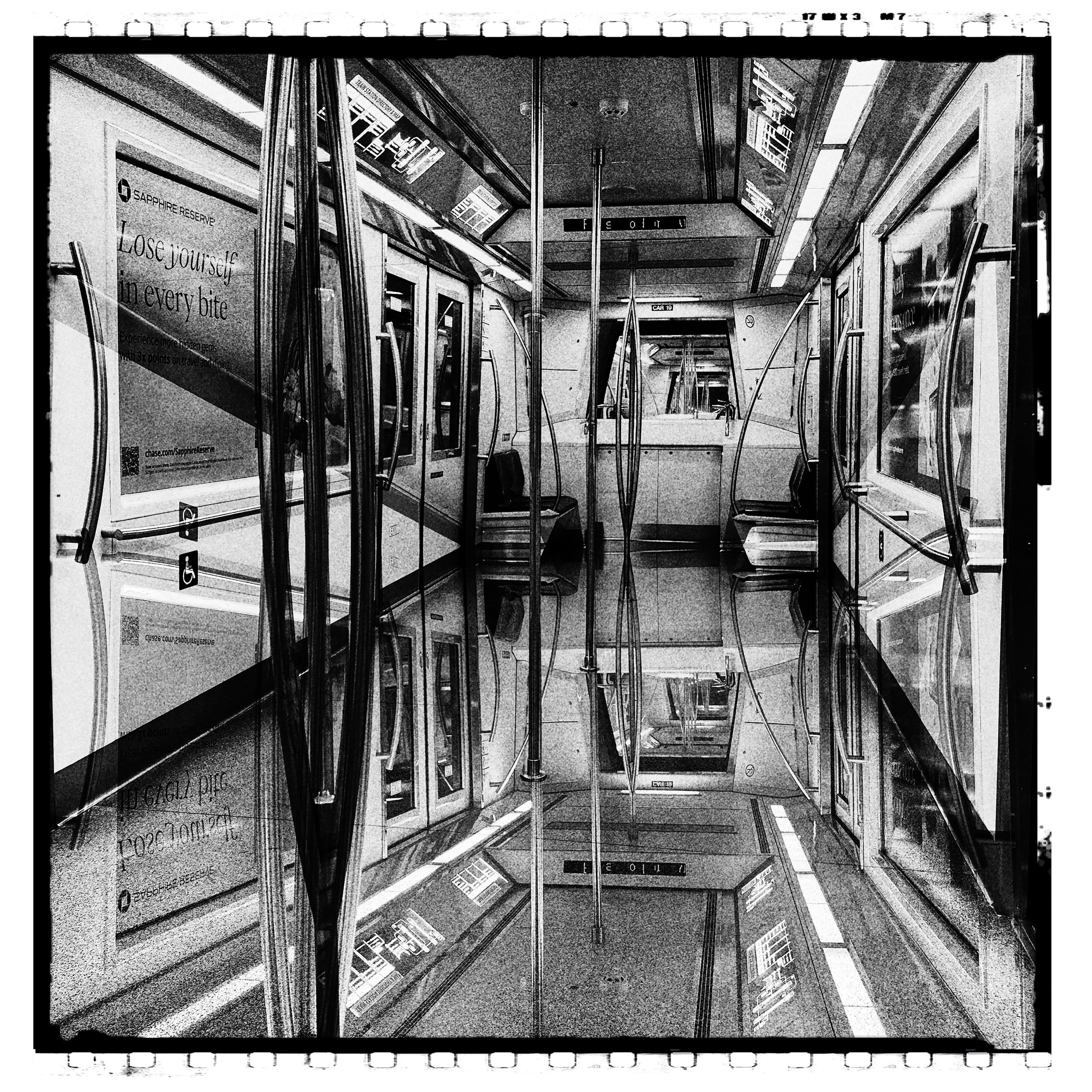
This photograph examines the fractured geometry of a subway tram through a grainy black-and-white composition that emphasizes structure, rhythm, and texture. The tram is reduced to a series of planes and surfaces—metal panels, windows, and seams—broken into fragments by light and shadow. In the absence of color, attention shifts to the interplay of form: strong horizontal lines suggesting movement and direction are interrupted by assertive vertical divisions, while curved elements soften and complicate the grid.
These curves introduce a tactile quality within the image. Their arcs push against the rigidity of the tram’s industrial design, creating moments of tension between mechanical precision and visual fluidity. The grain of the photograph adds another layer of texture, echoing the worn surfaces and motion of the urban environment. Rather than presenting the tram as a functional object, the image transforms it into an abstract landscape of intersecting shapes.
The outer edge of the frame references the sprocket holes of photographic film, recalling the physical materiality of analog image-making. This border becomes both a visual and conceptual device: it situates the photograph within the history of film while emphasizing the constructed nature of the image itself. Just as the tram is broken into planes and fragments, the photograph reveals its own structure as an artifact formed through mechanical processes.
Through these intersecting lines, curves, and textures, the work explores the relationship between motion and stillness, industry and abstraction. The subway tram—an object designed to move people through the city—becomes a study in form, inviting viewers to see the everyday infrastructure of urban life as a complex arrangement of geometry and rhythm.
This photograph examines the fractured geometry of a subway tram through a grainy black-and-white composition that emphasizes structure, rhythm, and texture. The tram is reduced to a series of planes and surfaces—metal panels, windows, and seams—broken into fragments by light and shadow. In the absence of color, attention shifts to the interplay of form: strong horizontal lines suggesting movement and direction are interrupted by assertive vertical divisions, while curved elements soften and complicate the grid.
These curves introduce a tactile quality within the image. Their arcs push against the rigidity of the tram’s industrial design, creating moments of tension between mechanical precision and visual fluidity. The grain of the photograph adds another layer of texture, echoing the worn surfaces and motion of the urban environment. Rather than presenting the tram as a functional object, the image transforms it into an abstract landscape of intersecting shapes.
The outer edge of the frame references the sprocket holes of photographic film, recalling the physical materiality of analog image-making. This border becomes both a visual and conceptual device: it situates the photograph within the history of film while emphasizing the constructed nature of the image itself. Just as the tram is broken into planes and fragments, the photograph reveals its own structure as an artifact formed through mechanical processes.
Through these intersecting lines, curves, and textures, the work explores the relationship between motion and stillness, industry and abstraction. The subway tram—an object designed to move people through the city—becomes a study in form, inviting viewers to see the everyday infrastructure of urban life as a complex arrangement of geometry and rhythm.