 Image 1 of 1
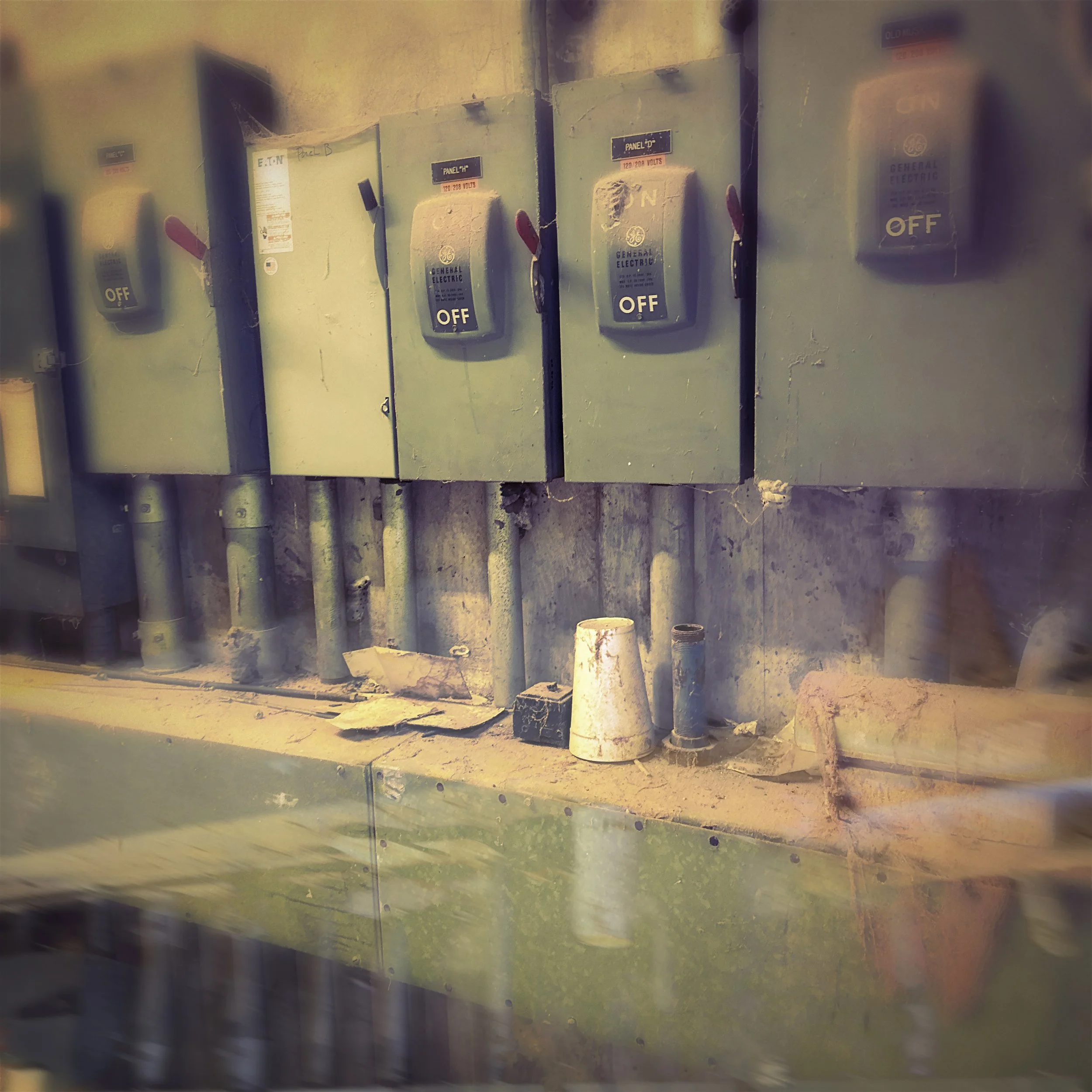
This photograph captures a quiet, industrial interior where time and use have left visible traces. A row of large electrical panels lines the wall, their muted green surfaces worn and slightly dulled with age. Heavy metal switches marked “ON” and “OFF” protrude from each box, suggesting a space once responsible for controlling unseen currents of power.
Below the panels, metal conduit pipes run vertically along a stained concrete wall, forming a rigid, mechanical rhythm. Dust and debris have gathered on the ledge beneath them—discarded paper, a small white cup, and fragments of materials that hint at past activity. The surfaces appear layered with years of grit and residue, creating a textured landscape of rust, chipped paint, and weathered metal.
The photograph is bathed in a soft, sepia-toned light that gives the scene a dreamlike quality. The edges of the frame blur slightly, as if the viewer is peering into a fading memory or an overlooked corner of a forgotten building. Despite the heavy industrial subject matter, the image feels contemplative and still.
Rather than focusing on dramatic action, the photograph draws attention to atmosphere and detail. It transforms a utilitarian electrical room into a study of texture, aging materials, and quiet abandonment—revealing the unexpected visual poetry within an ordinary mechanical space.
This photograph captures a quiet, industrial interior where time and use have left visible traces. A row of large electrical panels lines the wall, their muted green surfaces worn and slightly dulled with age. Heavy metal switches marked “ON” and “OFF” protrude from each box, suggesting a space once responsible for controlling unseen currents of power.
Below the panels, metal conduit pipes run vertically along a stained concrete wall, forming a rigid, mechanical rhythm. Dust and debris have gathered on the ledge beneath them—discarded paper, a small white cup, and fragments of materials that hint at past activity. The surfaces appear layered with years of grit and residue, creating a textured landscape of rust, chipped paint, and weathered metal.
The photograph is bathed in a soft, sepia-toned light that gives the scene a dreamlike quality. The edges of the frame blur slightly, as if the viewer is peering into a fading memory or an overlooked corner of a forgotten building. Despite the heavy industrial subject matter, the image feels contemplative and still.
Rather than focusing on dramatic action, the photograph draws attention to atmosphere and detail. It transforms a utilitarian electrical room into a study of texture, aging materials, and quiet abandonment—revealing the unexpected visual poetry within an ordinary mechanical space.