 Image 1 of 1
In the wake of Ruth Bader Ginsburg’s passing, I found myself reflecting on the profound impact of her work and the many landmark cases that reshaped the legal and cultural landscape of the United States. Throughout her career, she championed gender equality and helped lead the charge toward pay equity, fundamentally altering opportunities for women in the workplace and beyond.
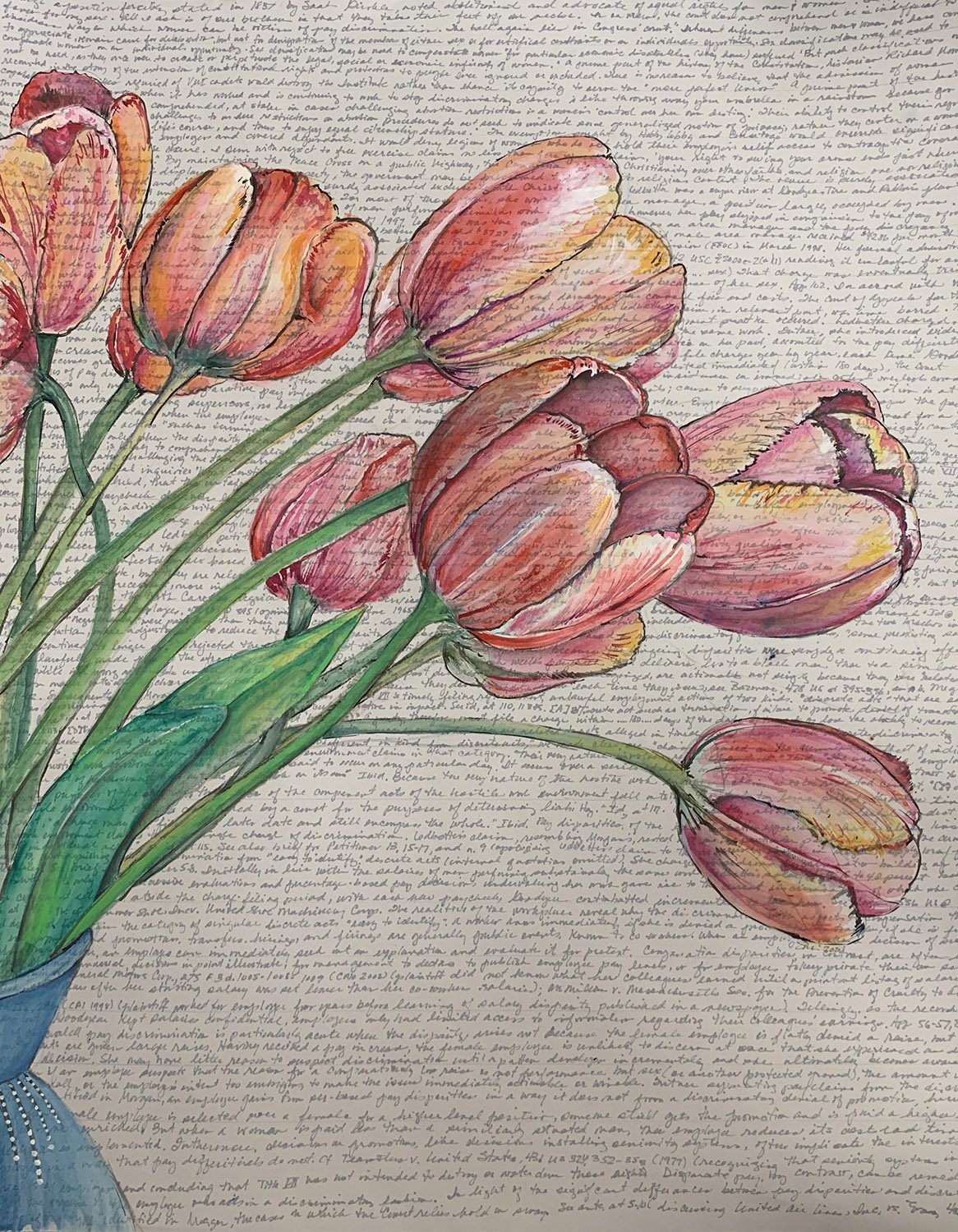
The background of this piece incorporates handwirtten text from the landmark case Ledbetter v. Goodyear Tire & Rubber Co., in which Justice Ginsburg issued a powerful dissent. Though the ruling initially limited recourse for workers facing pay discrimination, her dissent sparked public attention and ultimately helped inspire the passage of the Lilly Ledbetter Fair Pay Act. This legislation restored critical protections and provided a pathway for women and others to challenge wage discrimination.
Floral elements woven throughout the composition symbolize renewal and rebirth—an acknowledgment that progress often grows from struggle and persistence. The palette of blue and white references Justice Ginsburg’s Jewish faith, while the decorative elements pay homage to her iconic judicial collars, which became visual symbols of both her individuality and her authority on the bench.
This work honors Justice Ginsburg not only as a jurist but as a cultural force whose legacy continues to shape conversations about justice, equality, and the enduring pursuit of fairness.
Watercolor
20 × 16
24 × 20 framed
In the wake of Ruth Bader Ginsburg’s passing, I found myself reflecting on the profound impact of her work and the many landmark cases that reshaped the legal and cultural landscape of the United States. Throughout her career, she championed gender equality and helped lead the charge toward pay equity, fundamentally altering opportunities for women in the workplace and beyond.
The background of this piece incorporates handwirtten text from the landmark case Ledbetter v. Goodyear Tire & Rubber Co., in which Justice Ginsburg issued a powerful dissent. Though the ruling initially limited recourse for workers facing pay discrimination, her dissent sparked public attention and ultimately helped inspire the passage of the Lilly Ledbetter Fair Pay Act. This legislation restored critical protections and provided a pathway for women and others to challenge wage discrimination.
Floral elements woven throughout the composition symbolize renewal and rebirth—an acknowledgment that progress often grows from struggle and persistence. The palette of blue and white references Justice Ginsburg’s Jewish faith, while the decorative elements pay homage to her iconic judicial collars, which became visual symbols of both her individuality and her authority on the bench.
This work honors Justice Ginsburg not only as a jurist but as a cultural force whose legacy continues to shape conversations about justice, equality, and the enduring pursuit of fairness.
Watercolor
20 × 16
24 × 20 framed